The Hour We Turned the Outside Lights Off: A Street Tries a Little Darkness
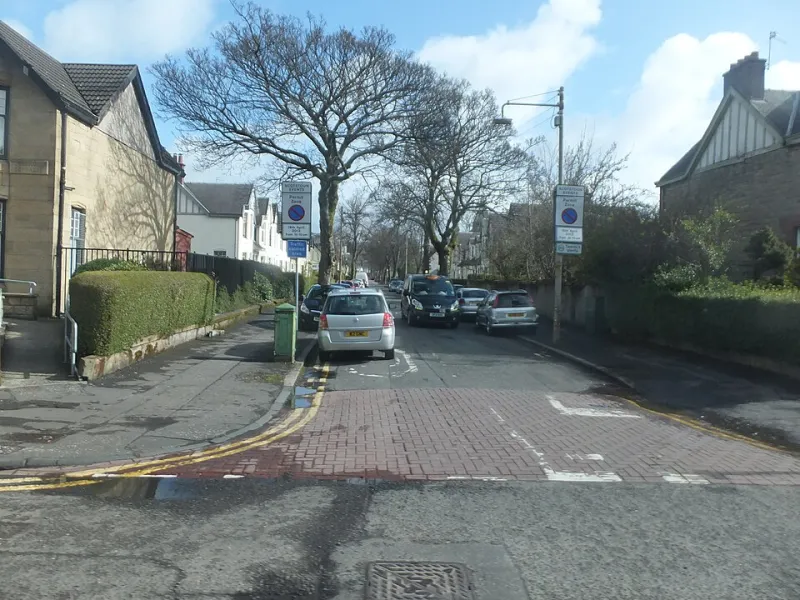
Photo: Barbara Carr , CC BY-SA 2.0, via Wikimedia Commons
The note came through the door on a Tuesday, printed on a quarter sheet of paper and folded once. It asked whether we might turn off our unnecessary outside lights for one hour on Thursday evening, between six and seven. Not the lights anyone needed. Not the path light for the neighbour who uses a stick, or the sensor over the back gate. Just the porch lamps, the garden floodlights, the strings of fairy lights left up for no particular reason. A small experiment in less light.
It was not a safety campaign. It was not a protest about energy bills or light pollution, though both came up. It was closer to an invitation: for one hour, on one street, in the middle of November, we would stop lighting the outside of our homes as if the dark were something to be pushed back. We would see what happened.
A modest ask, and a few honest hesitations
The first reaction on our group chat was practical. Would people be able to see their keys? What about the bin bags put out early? One neighbour mentioned that her security light came on whenever a fox passed and she wasn't sure she could switch it off without resetting something complicated. Another said she would join, but only if someone reminded her, because Thursday was already a blur.
There were quieter worries too. Darkness is not neutral for everyone. A street that dims together can feel cosy to one person and exposing to another. So the note was clear: join in if you want to, keep on whatever you need, and no one is keeping score. The hour was voluntary, and the exceptions were part of the point. A shared experiment only works if people feel able to say no.
By Thursday afternoon, a few of us had done small bits of preparation. Torches were found in kitchen drawers. One household moved a battery candle to the hallway. Someone else checked that the front step was clear. I put a torch by the door and promptly forgot where I had put it, which felt like the correct level of organisation for a street-sized experiment.
Six o'clock, and the street changed shape
At six, the orange wash from a neighbour's security light disappeared. Then the porch lamp opposite clicked off. One by one, the small glows that usually made our street look permanently awake went out, and the road settled into a different kind of evening.
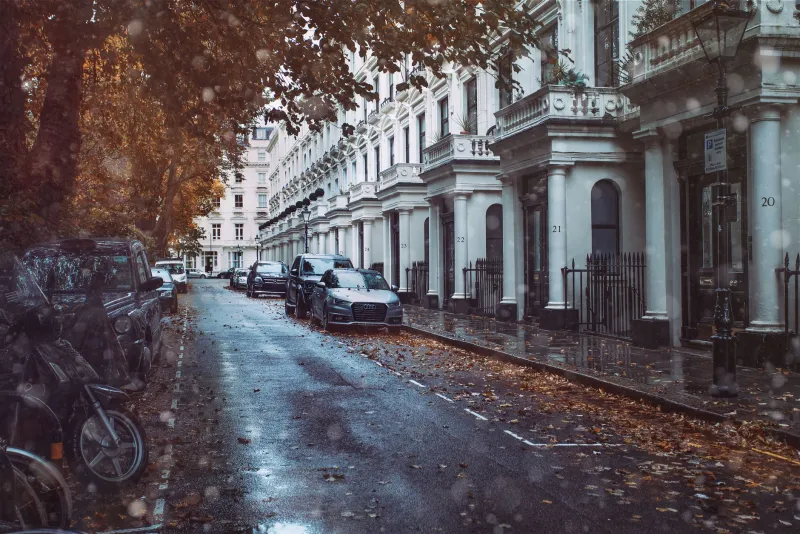
It was not pitch black. This is a residential street, not a field. There were still street lamps at the corners, still kitchen windows lit from inside, still the blue flicker of a television in one front room. But the quality of the light changed. The pavements became darker and softer. The houses seemed to step forward, each one a shape rather than a display. Without the usual glare, the windows looked warmer. You could see the corners of rooms, a lampshade, a shelf, the back of someone's chair.
A few of us stood at our windows, not doing anything in particular. It felt oddly absorbing. The street was quieter than usual, though the traffic on the main road was the same. A neighbour later said she had noticed the hum of her own fridge for the first time in years. Someone else saw two stars, faint but there, above the roof line. I saw the shape of the plane tree on the corner more clearly than I had all autumn.
What the dark made room for
The hour was not dramatic. Nobody had a revelation. But small things came forward. The sound of a kettle being filled. A cat crossing the road with great seriousness. The red light of a bicycle going past at the far end. Without the usual outdoor glow, the street felt less like a stage and more like a place where people actually live.
There is a practical side to this, of course. Less unnecessary light can mean less glare in bedrooms, and a little more awareness of how much we leave switched on out of habit. But the experiment was less about saving anything and more about attention. We are used to lighting the outside of our homes so that nothing unexpected can happen. For one hour, we let the unexpected be ordinary: a shadow, a sound, the shape of a neighbour's roof against the sky.
Not everyone joined in. Some lights stayed on, and that was fine. A street is not a team with a uniform. The point was not to make anyone feel watched or judged. It was to see whether a small, shared pause could be pleasant enough to repeat.
Tea at seven, and a decision
At seven, a few of us ended up on the pavement with mugs of tea. Someone had brought out a tin of biscuits. The porch lights stayed off for a few more minutes while we talked. The general feeling was that the hour had been strange in a good way, and shorter than expected. We had all meant to do something useful with the time and had mostly just looked out of the window instead, which seemed like the right outcome.
We decided to try it again, but not too often. Once a month, perhaps, through the winter. Not a rule, not a campaign, just a small appointment with the dark. Something to put on the note next time: bring a torch if you like, keep on what you need, and come out for tea afterwards if you fancy it.
Walking back inside, I noticed how bright my own hallway seemed. I turned off the porch light and stood for a moment in the ordinary dark of a November evening. The street was still there. The houses were still there. The kettle was already warming for the next cup.