The Borrowed Loppers: A Quiet Defence of the Gap Between Gardens
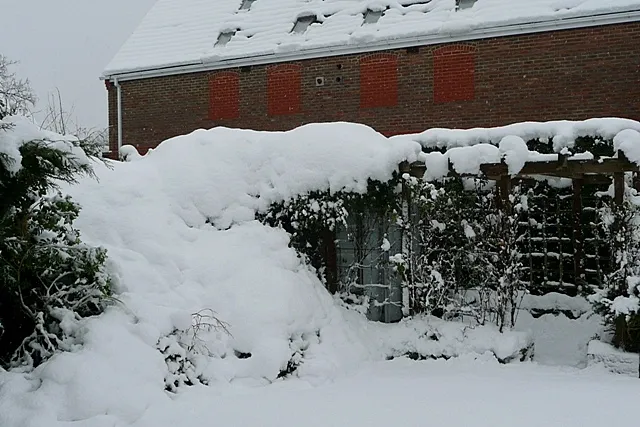
Photo: Graham Horn, CC BY-SA 2.0, via Wikimedia Commons
The gap in the laurel was not planned. It appeared one winter, after a windy night and a half-hearted bit of trimming, and by spring it had become a shape you could see through. Not a gate. Not a doorway. Just a low, green-framed opening between two back gardens, wide enough for a pair of loppers to be passed through and narrow enough that nobody would mistake it for an invitation to wander.
That is the thing about a gap in a hedge. It is a small piece of infrastructure with no paperwork. It says something quieter than 'come in' and something warmer than 'keep out'. It says: we are adjacent, and that is allowed to mean something.
The hedge as a wall we didn’t quite mean
Most UK back gardens are exercises in polite separation. A fence, a wall, a privet hedge, a shed placed just so. We like our boundaries. We also like the idea of being the kind of street where someone would take in a parcel. The gap sits between those two instincts, and that is why it feels useful.
It is not open-plan living. It is not a commune. It is a hedge with a loophole — a small, visible, low-effort acknowledgement that the person on the other side is not a stranger, exactly, but nor are they family. They are a neighbour. That category deserves more texture than a nod over the wheelie bin.
A gap can be the difference between borrowing a ladder and buying one you will use twice a decade. Between a plate of flapjack going back across the lawn and a plate going into the dishwasher with a vague sense of debt. Between a wave and a conversation. These are small things, but small things are where neighbourhoods actually live.
What a gap actually invites
In practice, a gap invites the specific and the modest. A borrowed tool. A returned plate. A quick word about the fence panel that is leaning. A child retrieving a ball without having to knock on the front door with a speech prepared. A bag of apples left on a step because the tree has overdone it again.
It also invites a certain kind of seeing. You notice when next door’s curtains are still closed at midday. You notice the bins have not gone out. You notice a new pot by their door, or a shed light left on. None of this makes you responsible for them. It simply makes the street a little less anonymous.
That is the utopian bit, and it is deliberately unglamorous. It is not a mural or a street party. It is a hole in a hedge that makes a small favour easier to ask for and easier to refuse.
Keeping it friendly, not a festival
The quickest way to ruin a good gap is to turn it into a project. A gap does not need a launch meeting. It does not need a laminated map. It certainly does not need a WhatsApp group called Hedge Watch.
It needs a brief, human agreement. Something like: 'I’ve left a gap by the shed — shout if you want to borrow the loppers.' Or: 'Use it whenever, but give us a knock first if it’s after seven.' Or simply: 'We keep it open in summer, closed in winter, no offence meant either way.'
That last point matters. A gap is a permission, not a right of way. It can be closed. It can be grown over. It can be reopened when someone needs it. The whole point is that it stays low-stakes. If either household starts to feel watched, or obliged, or like their garden has become a thoroughfare, the gap has stopped doing its job.
A short etiquette for the gap
Keep it visible. A waist-high opening in a hedge is a friendly thing. A hidden tunnel behind the bins is not. The gap should look like what it is: an easy route for small exchanges, not a secret passage.
Ask before you cross. Even if the gap has been there for years, a quick 'Is it all right if I come through?' keeps it comfortable. A text is fine. A wave is fine. Assuming is not.
Do not make it a permanent right of way. The gap is for the borrowed ladder, the returned plate, the five-minute chat. It is not a shortcut to the shop, a dog run, or a place to store things because your own shed is full.
Respect the closed curtain. If next door’s kitchen blinds are down and the car is gone, the gap is not an invitation to investigate. A gap gives you access, not insight.
Reciprocate lightly. Return the loppers clean. Bring back the plate with something small on it, or with nothing at all and a thank-you. The aim is not to keep score. The aim is to keep the thing easy.
And let it close if it needs to. A hedge can be trimmed. A gap can be grown out. No one should feel guilty for wanting their garden to feel like their own again. The small utopia is in the option, not the obligation.
The small utopia of a wave across the lawn
There is a particular kind of calm in seeing a neighbour through a gap and not needing to do anything about it. A wave. A nod. A 'morning' that carries across the wet grass. It is not friendship, necessarily. It is something more modest and, in its own way, more useful: familiarity without pressure.
We spend a lot of time talking about community as though it must be built. Sometimes it is simply allowed. A hedge gets a gap. A plate goes back. A pair of loppers leans against the fence with a note attached. The street becomes a little more porous, a little less like a row of separate lives waiting for an official reason to speak.
That is worth a small hole in a hedge. Not a grand gesture. Just a quiet one, low to the ground, with the lawn visible on the other side.