The Pot by the Door: Planting for a Spring You Can’t See Yet
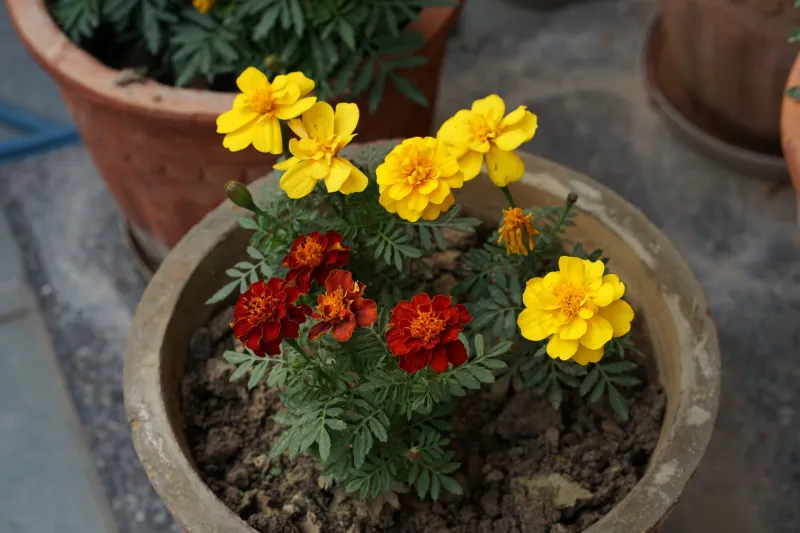
There is a particular kind of November light that makes everything look slightly unfinished. The leaves are mostly down, the afternoons are closing in, and the garden — if you have one — has that damp, apologetic look of a room after a party. It is not the most obvious moment to start something. And yet, this is exactly when a handful of bulbs and a pot by the door can feel like the most sensible thing in the world.
Not because it is a project. Not because it will look good on a grid. But because planting something you will not see for months is a quiet, practical way of saying: I think there will be a spring. I am willing to wait for it.
A small promise, made in the dark
Spring bulbs are strange things. They look like onions that have given up. You put them in compost, water them once, and then basically ignore them through the coldest part of the year. There is no immediate reward. No instant colour. No satisfying before-and-after. Just a pot by the door, doing nothing visible, while the weather does its worst.
That is the point. In a culture that prefers quick results, bulbs ask for something older: patience. They are a small, seasonal reminder that not everything worth having arrives on the same day you decide you want it. And in November 2026, with the nights drawing in and the news doing its usual noise, a bit of deliberate patience feels less like gardening and more like wellbeing.
What you actually need
You do not need a garden. You do not need a shed full of tools. You need a pot with drainage holes, some peat-free compost, a few bulbs, and roughly twenty minutes. A trowel helps, but a spoon will do. A watering can is nice; a jug is fine.
If the pot is going by the door, choose something frost-proof — terracotta is lovely but check it is frost-resistant, or go for a simple glazed or plastic pot that can handle a UK winter. Raise it slightly on pot feet or a couple of bricks so water can escape. Winter wet is more of a threat to bulbs than cold.
Choosing bulbs that suit a small space
For a doorstep pot, think compact and sturdy. Tall tulips can look wonderful in a border but may flop in a windy porch. Good choices include dwarf narcissi such as ‘Tête-à-Tête’, small crocus, Iris reticulata, and shorter tulips like ‘Red Riding Hood’ or ‘Purissima’. If you want scent near the door, hyacinths are generous, though they need a bit more room.
A garden centre in November will usually have a decent selection — and it is worth asking what is still good to plant. Tulips are famously forgiving about late planting; November is actually a fine time for them. Narcissi are happiest a little earlier, but healthy bulbs planted now will often still come good. Crocus can be planted into late November. If a bulb feels soft or looks mouldy, leave it.
The planting bit, which is short and forgiving
Fill your pot about two-thirds with compost. Place the bulbs pointy end up, roughly their own width apart. As a rule of thumb, plant them at about two to three times their own depth. A 10cm pot of compost above a tulip bulb is not too much. For a layered look, you can put larger bulbs lower and smaller ones nearer the surface, but honestly, a simple single layer is fine.
Cover with compost, leaving a couple of centimetres below the rim so you can water without making a mess. Water once, gently, until it runs out of the bottom. Then put the pot where it will get light but not sit in a puddle. That is it. You have made your promise.
Doorstep versus windowsill
A doorstep pot is the classic. It greets you when you come home and gives the front of the house a bit of life in the grey months. A windowsill — the outside kind, or a balcony ledge — works too, especially if you choose something compact. Just be aware that a south-facing windowsill can warm up fast on a bright winter day, and bulbs prefer cool roots. A north- or east-facing spot is often kinder.
Indoors is a different story. Forced hyacinths and paperwhite narcissi are lovely, but they are a winter treat rather than a spring promise. If you want the full wait — the proper November-to-March kind — keep your pot outside.
The waiting is the point
For the next few months, not much will happen. You will water sparingly when the compost feels dry, maybe cover the pot with a bit of mesh if squirrels take an interest, and otherwise leave it alone. In January, you might see pale green noses pushing through. In February, they will thicken. By March, there will be colour.
But the real benefit is not only the flowers. It is the small daily glance at the pot. The reminder that something is quietly underway, even when the surface looks unchanged. That is a useful thing to have by the door in winter: a living metaphor for the fact that growth is often invisible before it is obvious.
A note on care through winter
Do not overwater. Damp compost that freezes is worse than dry compost. If the pot is heavy with rain, tilt it gently to let excess drain. Keep it out of the fiercest wind if you can. And resist the urge to bring it inside to speed things up — bulbs need the cold to trigger proper growth. You are not in charge of the timetable. That is part of the deal.
What you’re really doing
Planting bulbs in November is a small act of optimism. It is also a gentle rebuke to the idea that wellbeing has to be grand or immediate. It does not. Sometimes it is a pot by the door, a handful of compost, and the willingness to wait for something you cannot yet see. In a world that keeps asking for proof, a bulb is a lovely thing to believe in.