The Case for Sitting Still: In Praise of the Neighbourhood Bench
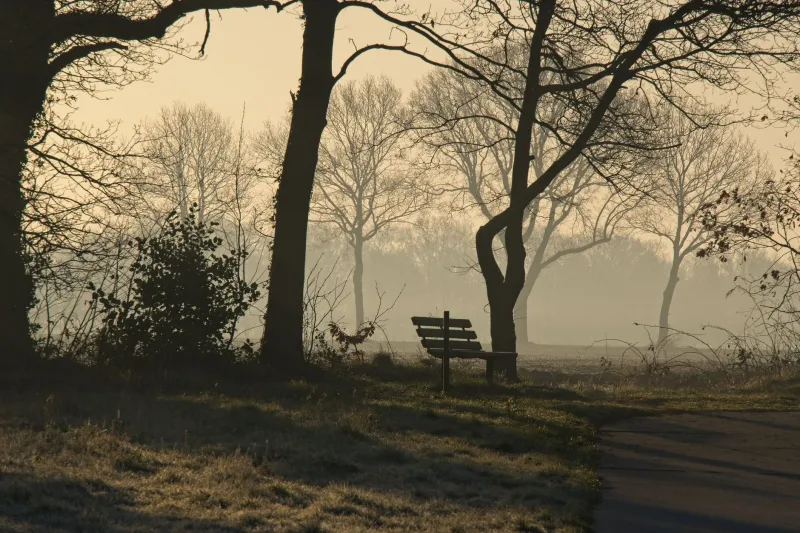
On a damp Tuesday in November 2026, I walked past the same bench I pass most weeks and finally sat down. It is not a landmark. It has no plaque, no view of a cathedral, no carefully curated wildflower border. It faces a bus stop, a bakery and a patch of grass that is mostly mud until April. I stayed for eleven minutes and did nothing useful at all. It was, unexpectedly, the best part of my day.
That is the quiet case for the neighbourhood bench. Not as nostalgia, not as a prop for a pretty high street, but as a small, practical piece of civic infrastructure that asks nothing of us and gives back more than we tend to notice.
A small piece of infrastructure with a large job
A bench does several jobs at once. It gives older people somewhere to pause halfway home. It gives a parent a place to sit while a child runs off steam. It gives a dog walker a destination, a teenager somewhere to loiter without trouble, a shift worker a spot to eat a sandwich in the open air. It also gives the rest of us something less measurable: permission to stop.
In a culture that treats movement and productivity as defaults, sitting still can feel almost rude. There is always a phone to check, a list to tackle, a reason to keep walking. A bench interrupts that. It says, without any grand statement, that a street is not only a place to pass through. It is a place to be.
What makes a bench good, and what makes it useless
Not every bench is a good bench. A bad one faces a wall, sits in the full glare of traffic or has a backrest set at an angle that seems designed for a different species. A good one tends to get a few simple things right. It has a backrest. It is dry. It is set back slightly from the pavement, close enough to watch the world but not so close that you feel in the way. It has a bit of theatre in front of it: a street, a park, a bus queue, a square where pigeons argue over chips.
The best benches also have a little shade in summer and a little shelter in winter. They are not always beautiful. One of my favourites is a plain wooden slat bench under a sycamore, slightly too low for comfort, with a view of a launderette and a charity shop. It is perfect. It has what I have come to think of as the bench test: can you sit there for ten minutes without feeling you should explain yourself?
The quiet social club
Benches are low-pressure social spaces, which is why they matter. You do not need to book, join or introduce yourself. You can nod at the person beside you, comment on the weather, share a packet of biscuits or say nothing at all. In a country where loneliness is often discussed in grand terms, the bench offers something humble: a bit of company without a contract.
I have heard more useful conversations on benches than in some meetings. A man once told me the best route to the nearest recycling centre. A woman explained which bakery sells the last decent sausage roll in town. None of it was profound. All of it was neighbourly. That is the sort of small utopia that does not announce itself. It just happens while you are sitting still.
The budget problem
The awkward truth is that benches are easy to cut. They need maintenance, cleaning and occasional repair. They can attract anti-social behaviour, or at least the fear of it. When council budgets are squeezed, street furniture can start to look like a luxury rather than a basic. A missing bench is rarely a headline. It is just a gap where a bench used to be.
But protecting benches is not about living in the past. It is about recognising that small public comforts do a lot of quiet work. A bench costs far less than many grand regeneration projects and asks for no app, no ticket and no membership fee. If we want town centres and parks to feel humane, we need places where people can simply stop. That is not sentimental. It is practical.
How to find, use and protect one
Start by finding your local good bench. Look for one with a view, a bit of shelter and a reason to linger. Sit for ten minutes without reaching for your phone. Notice what happens. You will probably feel a little awkward at first. Then you will notice the street in a way you do not when you are walking through it.
Use it in all weathers, within reason. A bench in November is different from a bench in June, but both have their uses. Protect it by picking up your litter, reporting damage rather than tutting at it, and supporting any local friends group that looks after your park. If a bench disappears, ask why. Write to your councillor. Turn up to a consultation. None of this is dramatic, but it is how small civic things survive.
And if you are lucky enough to have a good bench near you, do not save it for a special occasion. Sit down. Watch the bus come and go. Let the bakery smell drift over. Do nothing for a bit. It might be the most useful thing you do all day.